How Black Consumers Find Brands Before Retailers Do
Retail has always liked to imagine itself as the gatekeeper of discovery. The shelves decided what mattered. Buyers decided what scaled. Merchandising teams decided what consumers would see, touch, and ultimately buy. For decades, that structure shaped how brands entered the mainstream. First came retail validation, then consumer awareness. That order no longer holds.
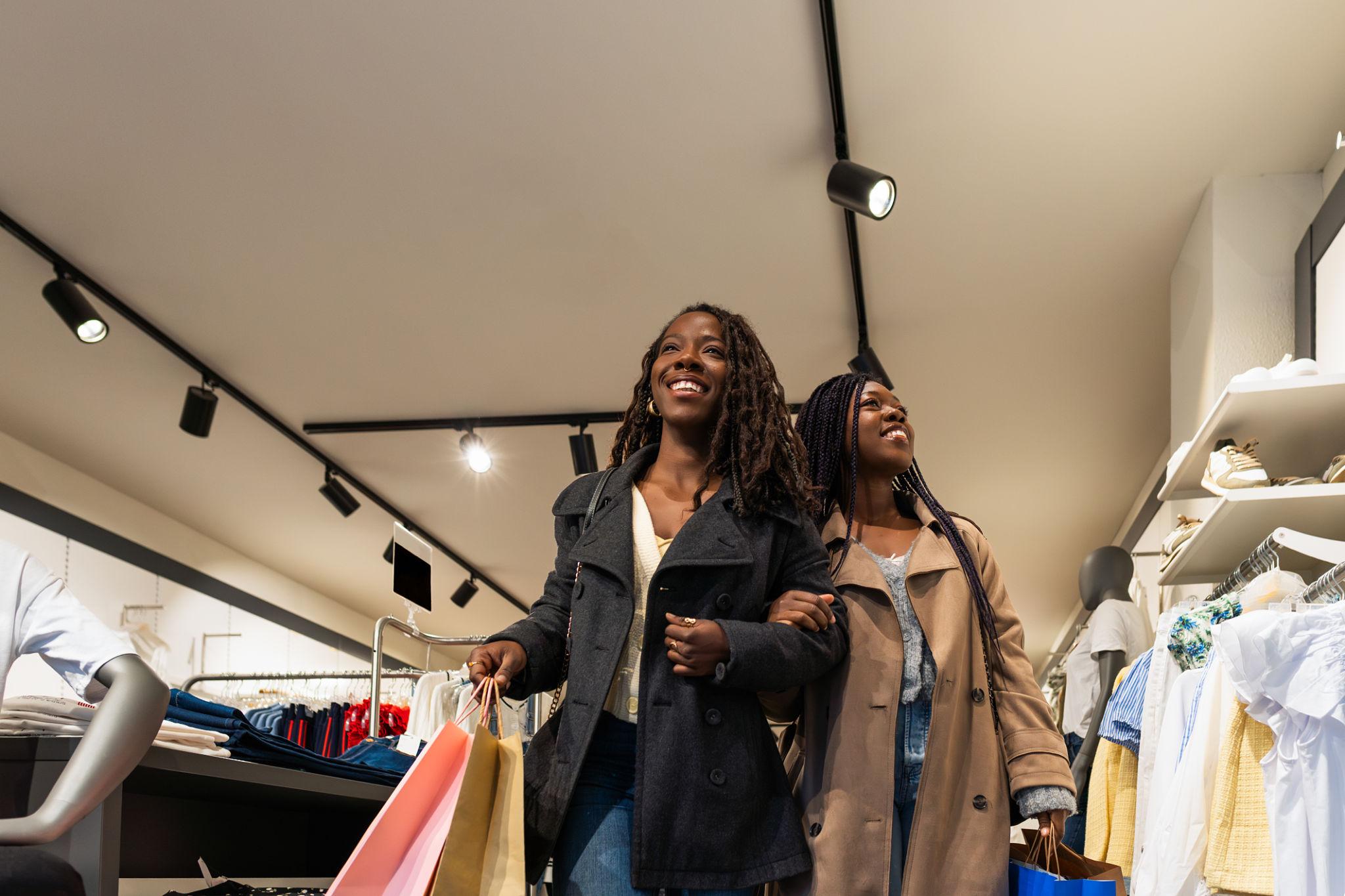
Today, Black consumers are often discovering brands long before retailers recognize their momentum. In many categories, particularly beauty, fashion, food and beverage, and lifestyle, cultural relevance is now forming entirely outside traditional retail ecosystems. The shelf is no longer where discovery begins. It is where discovery arrives after culture has already moved.
That shift has major implications for brands and retailers still relying on legacy assumptions about consumer behavior. Because increasingly, Black consumers are not waiting for retailers to introduce them to what is next. They are finding products through creators, communities, social platforms, cultural conversations, and peer ecosystems that move with lightning speed, compared to traditional merchandising cycles. And in many cases, those consumers are shaping demand months before retailers catch up.
This is one of the clearest signals emerging from Jembe Intelligence research: discovery is becoming more culturally networked, more emotionally driven, and far less dependent on institutional validation. Consumers are increasingly trusting people over platforms. That evolution matters because it fundamentally changes who controls influence.
For years, retailers functioned as curators of legitimacy. Shelf placement communicated trust. Distribution implied relevance. But digital culture has fragmented that authority. Today, consumers can build strong emotional trust around brands they encounter through a creator’s routine, a TikTok review, a group chat recommendation, or a culturally specific online conversation long before those products ever appear in a major retail environment.
And Black consumers are often at the center of that shift. Particularly among younger audiences, discovery has become deeply intertwined with cultural proximity. Consumers increasingly gravitate toward brands that feel emotionally familiar, culturally aware, or community-endorsed rather than simply widely available.
THEJEMBE DATA POINT:
Nearly 55% of respondents in our recent study indicated that they typically hear about or discover new food and beverage products on social media.
Food and beverage is crucial here, because discovery increasingly happens through social platforms, creators, and peer networks before products ever achieve broad retail visibility.
Traditional advertising and in-store visibility still matter, but they no longer dominate the way they once did. Social media, creators, peer recommendations, and culturally relevant digital spaces increasingly shape initial awareness before retail even enters the equation.
This is important in categories like beauty and fashion, where Black consumers often rely on trusted community voices to filter products through lived experience. The logic is simple: Consumers trust people who feel closer to their reality. That trust creates an entirely different speed of cultural adoption.
Retail systems, by comparison, still tend to move cautiously. Buyers often wait for signals, like sales velocity, broader awareness, trend validation, and market proof. But cultural communities move faster than institutional retail processes. By the time many retailers recognize a brand’s momentum, Black consumers have often already tested it, discussed it, validated it, and emotionally integrated it into their routines. In other words, culture increasingly predicts retail, not the other way around.
This creates a growing disconnect between how retailers believe discovery works and how it actually functions in practice. Many retail strategies still assume visibility creates demand. Increasingly, demand is creating visibility. And the brands benefiting most from this shift are often the ones that understand cultural fluency, not just distribution.
This is why smaller brands are now capable of building enormous loyalty before entering major retail partnerships. They no longer need institutional validation to establish relevance. They need community alignment. That distinction changes the economics of influence entirely. Historically, scale created trust. Now trust increasingly creates scale.
Black consumers are playing a major role in accelerating this transition because cultural interpretation has become central to how products are evaluated. Consumers are not simply asking: “Does this product work?”
They are also asking:
- “Does this brand understand me?”
- “Does this feel authentic?”
- “Does this recommendation feel credible?”
- “Who is introducing me to this product?”
Those emotional filters matter more than many traditional retail models account for. Especially because Black consumers have long navigated industries where mainstream retail environments did not consistently prioritize their needs. In beauty, fashion, haircare, skincare, and even food and beverage, consumers often developed parallel discovery systems rooted in community knowledge and cultural exchange.
Social media simply scaled those systems digitally. What once traveled through salons, barbershops, churches, dorm rooms, and friend groups now moves instantly through TikTok, Instagram, creators, podcasts, and niche digital communities. But the emotional logic behind the behavior remains remarkably similar: trusted cultural proximity. That proximity increasingly shapes what consumers perceive as credible.
THEJEMBE DATA POINT:
In our recent study, 28% of respondents indicated they are extremely likely are you to purchase from a brand founded or led by Black creators.
That response reflects a broader movement toward culturally informed trust. Consumers increasingly associate founder identity and cultural familiarity with product intentionality. They believe brands built closer to lived experience are more likely to understand nuanced needs from the start. This perception creates major advantages for founder-led and culturally specific brands operating outside traditional retail systems. Because consumers no longer require mass-market visibility to perceive legitimacy.
In many cases, being discovered “early” through culturally trusted spaces actually increases emotional value. It creates a sense of insider knowledge, community validation, and cultural participation that large-scale retail visibility sometimes weakens rather than strengthens.
That dynamic is particularly visible among Gen Z and younger millennial consumers, whose relationships to brands are increasingly shaped by identity signaling and digital community behavior. Products today function socially, not just functionally.
Consumers use brands to communicate: taste, alignment, values, cultural awareness,
and community belonging. This is one reason traditional retail forecasting models increasingly struggle to predict cultural momentum accurately. Retail systems are still heavily optimized around transactional behavior, while culture increasingly moves through emotional and relational behavior first. The signal appears socially before it appears commercially.
That creates risk for retailers who remain disconnected from culturally specific consumer ecosystems. Because when retailers fail to recognize emerging cultural behavior early enough, they risk entering trends reactively rather than strategically. The result is often assortments that feel delayed, disconnected, or overly trend-chasing rather than culturally informed. Consumers notice that lag. And increasingly, they interpret it as evidence that retailers are observing culture from the outside instead of participating in it directly.
This becomes even more important as Black consumers continue influencing broader mainstream culture across categories far beyond explicitly multicultural products. Beauty aesthetics, fashion trends, creator culture, music influence, food trends, and digital language increasingly move from culturally specific communities into mainstream adoption at an accelerated speed.
Retailers who misunderstand where those signals originate often misunderstand where future demand will emerge next. That misunderstanding has direct business consequences.
Because the future competitive advantage in retail may no longer belong solely to companies with the largest footprint or deepest inventory relationships. Increasingly, advantage may belong to companies capable of identifying cultural momentum before it becomes obvious.
That requires a different kind of intelligence. Not simply sales data, and not simply trend reports. But cultural interpretation. Brands and retailers need to understand: which communities are driving adoption, why products are resonating emotionally, how trust is forming, where discovery is happening first, and which signals indicate broader cultural movement. Those insights rarely appear clearly inside traditional dashboards alone.
This is why cultural intelligence is becoming operationally important, not just creatively interesting. Because in today’s market, consumer behavior forms socially before it scales commercially. And Black consumers remain one of the clearest leading indicators of that shift.
The brands winning right now are not simply the ones with visibility. They are the ones embedded closely enough within culture to recognize movement before it fully materializes at scale. Retailers that continue relying exclusively on historical buying patterns may increasingly find themselves reacting to trends that consumers have already emotionally moved beyond.
Because discovery no longer starts at the shelf. Increasingly, the shelf is simply where culture arrives after communities have already decided what matters.
Want to See How Black Consumers Are Driving Product Discovery in Real Time?
Jembe Intelligence helps brands and retailers track the cultural signals shaping discovery, trust, loyalty, and emerging consumer behavior before trends fully reach the mainstream market.
Request a preview of Jembe Intelligence