Why Black Drivers Stay With Some Brands and Leave Others
The auto industry loves to talk about loyalty as if it’s a function of engineering, and helps the car go. Build a reliable vehicle, keep the financing competitive, layer in enough technology to justify the monthly payment, and the customer comes back. But loyalty, especially among Black consumers, is rarely that mechanical. It is emotional, economic, social, and cultural.
And increasingly, it is a referendum on whether a brand understands the lived reality of the people driving it. That is the cultural loyalty gap now sitting quietly beneath the automotive market.
On paper, the category is healthy. U.S. vehicle brand loyalty climbed above 51 percent in 2025, a five-year high, as OEMs leaned harder into retention strategies amid affordability pressure and EV fragmentation. But industry averages conceal a more urgent truth: broad loyalty benchmarks rarely explain why specific communities stay, switch, advocate, or disengage. That missing “why” is where TheJembe’s latest research on Black auto consumers becomes instructive.
Our study, built from direct responses among Black drivers across ownership stages, explored not just current vehicle ownership and future purchase intent, but the deeper mechanics of trust: reliability perceptions, maintenance economics, digital shopping behavior, cultural alignment, and likelihood to repurchase the same brand. The findings suggest something many OEMs still underestimate.
For Black consumers, loyalty is not built at the point of sale. It is built across the ownership experience. Our data shows that when Black drivers describe their current brand, the strongest drivers of repeat intent are rarely surface-level image attributes alone. Instead, the brands most likely to earn another purchase tend to score highest across a lived stack of daily realities: overall reliability, ease of maintenance, cost predictability, fuel economy, driver comfort, passenger comfort, and safety confidence.
THEJEMBE DATA POINT: 57% of respondents in our study rated reliability “excellent” among top-loyalty brands.
That may sound obvious, but the cultural layer changes the strategic implication. For many Black households, the vehicle is not merely personal transportation. It is family infrastructure, career continuity, neighborhood mobility, and social flexibility. It may be used to get children to school, elders to appointments, side-hustle inventory across town, or multiple wage earners to staggered shifts. A car that creates uncertainty is not just inconvenient. It disrupts life.
That is why maintenance trust, financing transparency, and service predictability often matter as much as brand aspiration. This is where the industry’s loyalty conversation needs to mature. TheJembe’s data also points to a second fault line: cultural alignment.
One of the most revealing questions in our survey asked Black consumers how culturally aligned they feel with their current vehicle brand. Not because a car brand needs to perform identity theatrics, but because vehicles function as cultural objects. They communicate taste, values, practicality, ambition, and social belonging. Some brands are purchased because they are perceived as smart financial choices. Others because they feel dependable in a way that maps to community trust. Others still, because they signal a version of upward mobility that feels earned, not performative.
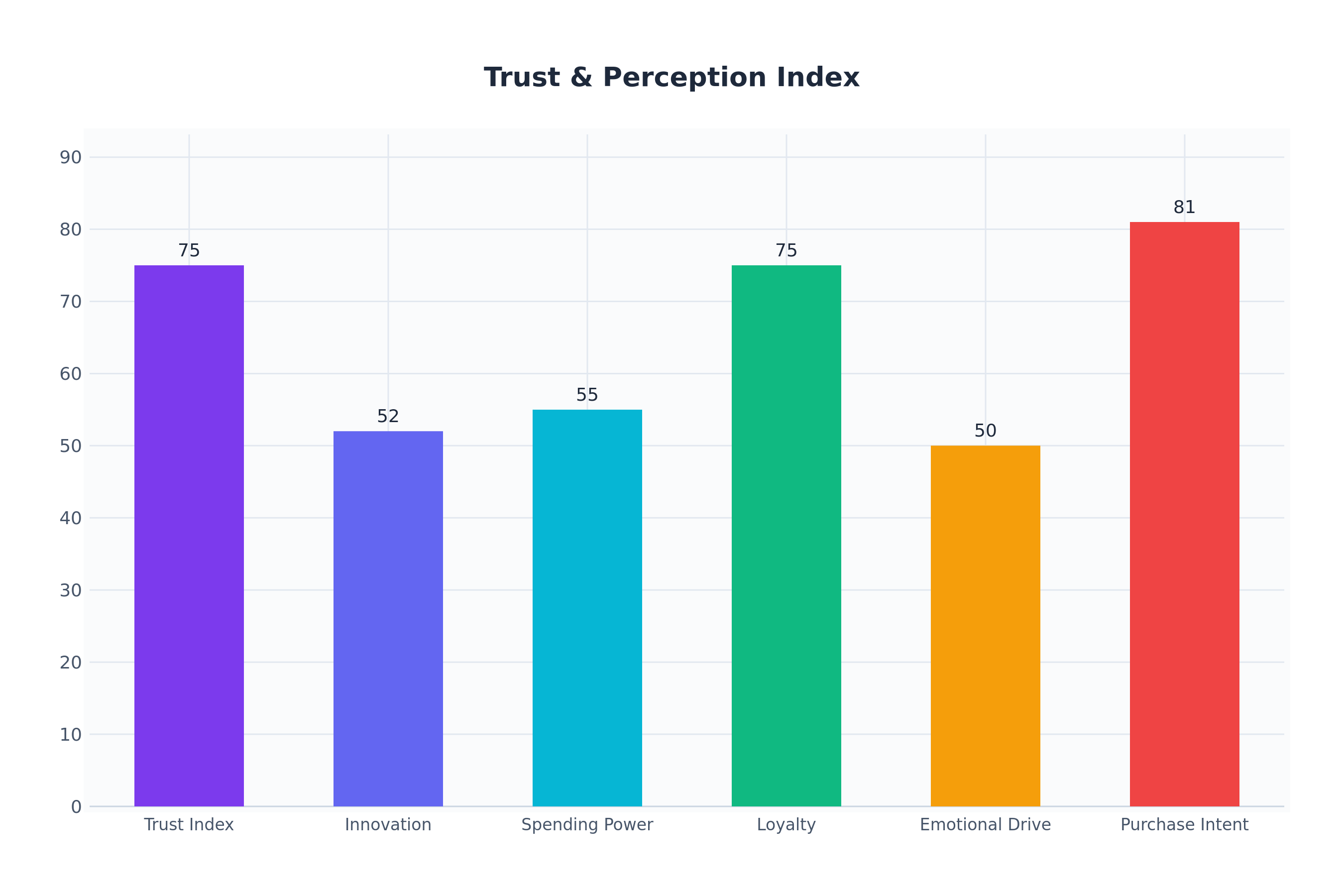
THEJEMBE DATA POINT: In our study, the top descriptors Black consumers selected for Ford were dependable, trustworthy, and capable, signaling that loyalty is rooted in both product confidence and perceived life fit.
This is where loyalty begins to diverge from the industry’s default playbook. The question is no longer simply, Did the owner like the car? It’s “did the ownership experience reinforce who they believe themselves to be? That is a much harder thing to measure, and far more valuable once understood. It also has major implications for retention marketing.
Our research found that the likelihood of recommending a current vehicle brand to a friend or colleague is tightly linked to maintenance economics and comfort satisfaction, not just headline product features. That should be a wake-up call for OEM lifecycle teams. Recommendation behavior in Black communities often carries outsized weight because trust networks matter. Word-of-mouth is rarely casual. It is a form of risk transfer.
When one driver recommends a brand, they are effectively underwriting the decision for someone else in their network. That means every breakdown, opaque service quote, or disappointing dealership interaction compounds beyond the individual customer. It travels. The inverse is also true. A brand that consistently delivers predictable ownership value builds loyalty far beyond the first household.
Our data on future purchase timing reinforces this dynamic. Among Black drivers planning a purchase or lease within the next 6 months, repurchase intent rose significantly among those who rated their current vehicle highly on fuel economy, safety, and comfort.
In other words, the next sale is often won long before the shopping journey begins. This is especially relevant as consumers weigh new vs. used purchases in an affordability-constrained market where average transaction prices remain above $50,000. Loyalty now depends on whether the current ownership experience feels economically survivable. And here, Black consumers are often evaluating brands through a sharper lens of long-term value.
Our study explored how Black drivers plan to browse for their next vehicle, including dealer visits, OEM websites, third-party marketplaces, and online-first commerce paths. What emerges is not a simple digital shift, but a trust shift.
Consumers increasingly want omnichannel control. They are open to online browsing and even online purchase exploration, but hesitation rises sharply when the process obscures the physical verification step. That matters because digital retail is often positioned as a convenience play. For Black consumers, it can just as easily become a transparency test.
THEJEMBE DATA POINT: 25% of respondents in our study stated they are willing to buy online without a test drive.
The strategic takeaway for auto brands is clear. Digital convenience alone does not create loyalty. Clarity does. The brands most likely to close the cultural loyalty gap are the ones that understand the ownership journey as an ecosystem:
- product quality
- maintenance confidence
- dealer trust
- digital transparency
- identity alignment
- social recommendation loops
That ecosystem becomes even more critical as the industry moves into hybrid and EV transition decisions, where loyalty patterns are fragmenting. While overall EV repurchase remains relatively strong, fuel-type loyalty has become more volatile amid policy shifts and charging uncertainty. For Black consumers, those concerns are often magnified by infrastructure confidence, neighborhood charging access, and long-term maintenance ambiguity. Which means the loyalty gap may widen if brands continue to frame retention as a marketing problem instead of an ownership-trust problem.
The brands that win the next decade will be the ones that stop treating Black consumers as just another demographic segment inside a CRM workflow. Black consumers are a high-value cultural market whose expectations are increasingly predictive of where mainstream loyalty is headed. Because in automotive, loyalty is never just about the badge on the hood. It is about whether the brand behind it understands what the vehicle actually means in people’s lives. That is the gap.
And for the brands paying attention, it is also the opportunity.
Want to see how Black drivers are reshaping automotive loyalty in real time?
Request a preview of the full survey findings and explore how Jembe Intelligence helps brands track trust, repurchase intent, EV readiness, and category shifts as they happen.