Beyond the Shelf: How Black Consumers Discover, Trust, and Choose Brands Before They Buy
The Retail Model Has Changed
For decades, retailers occupied a privileged position in the consumer decision-making process. They controlled visibility, access, and discovery. If a product secured shelf space at a major retailer, it had a significant advantage. Consumers discovered products in-store, compared options side by side, and often made purchase decisions in the moment.
Today, that model is breaking down in a big way.
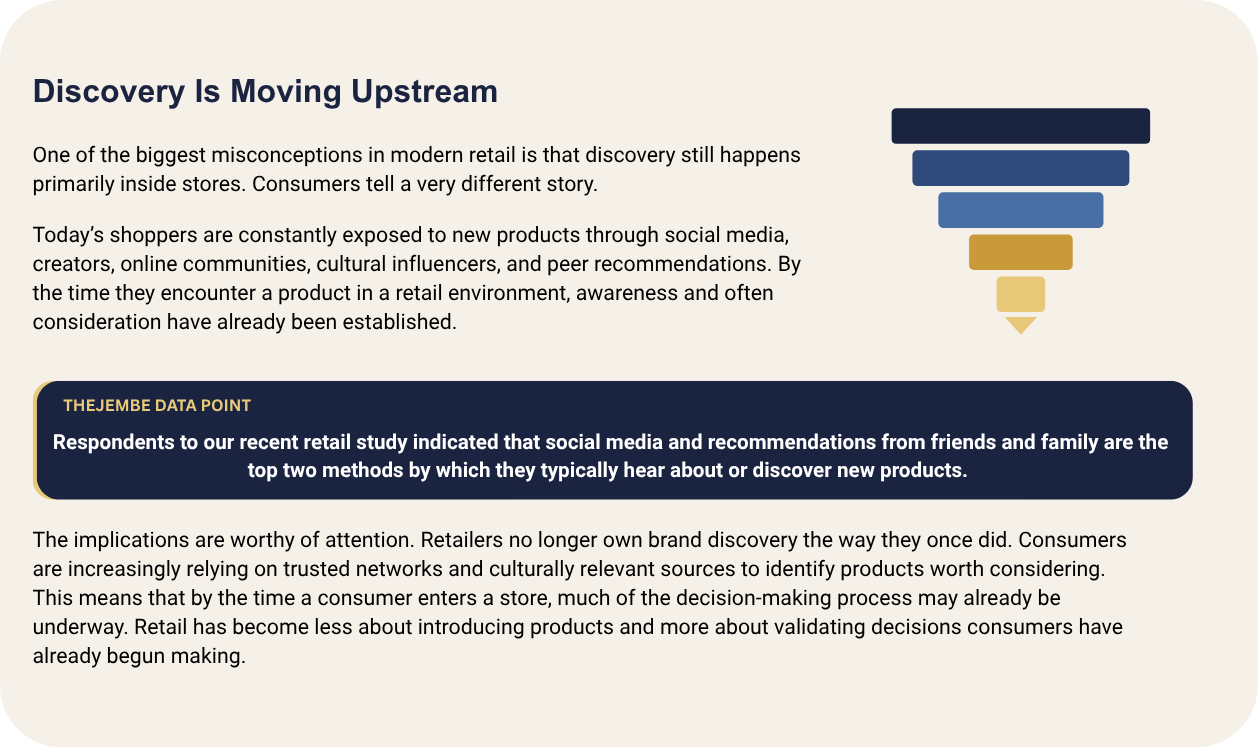
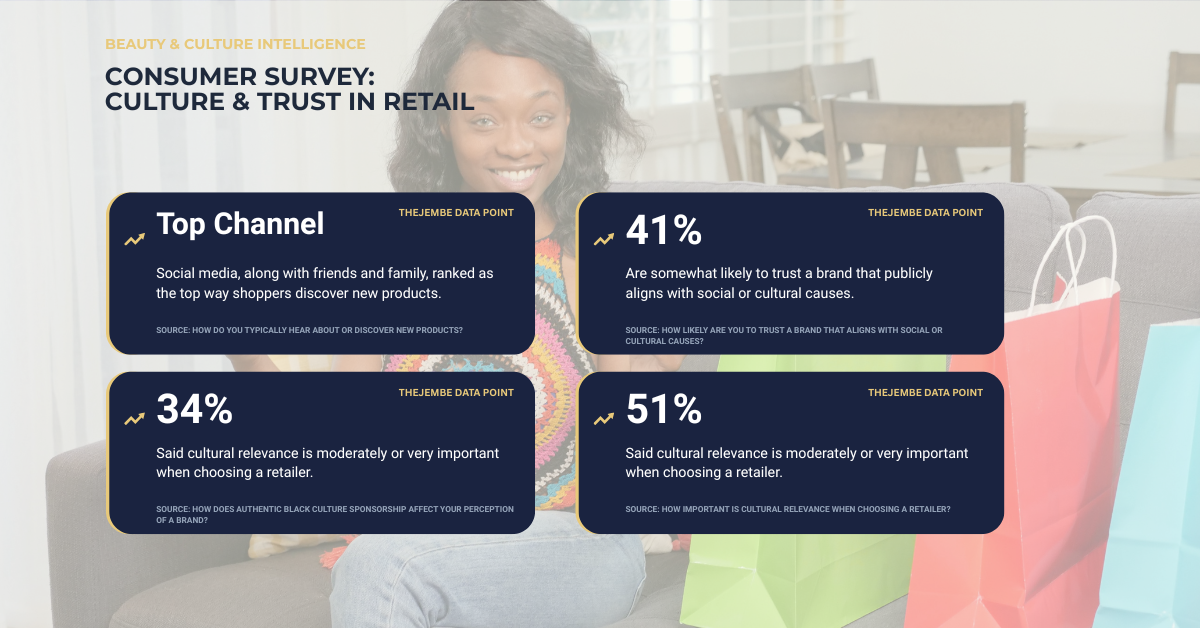
Consumers are increasingly deciding what they want before they ever walk into a store, open an app, or visit a retailer’s website. Discovery is happening elsewhere—through creators, communities, social platforms, and cultural conversations. Trust is being built long before a product reaches the shelf. For Black consumers in particular, this shift is creating a new retail reality.
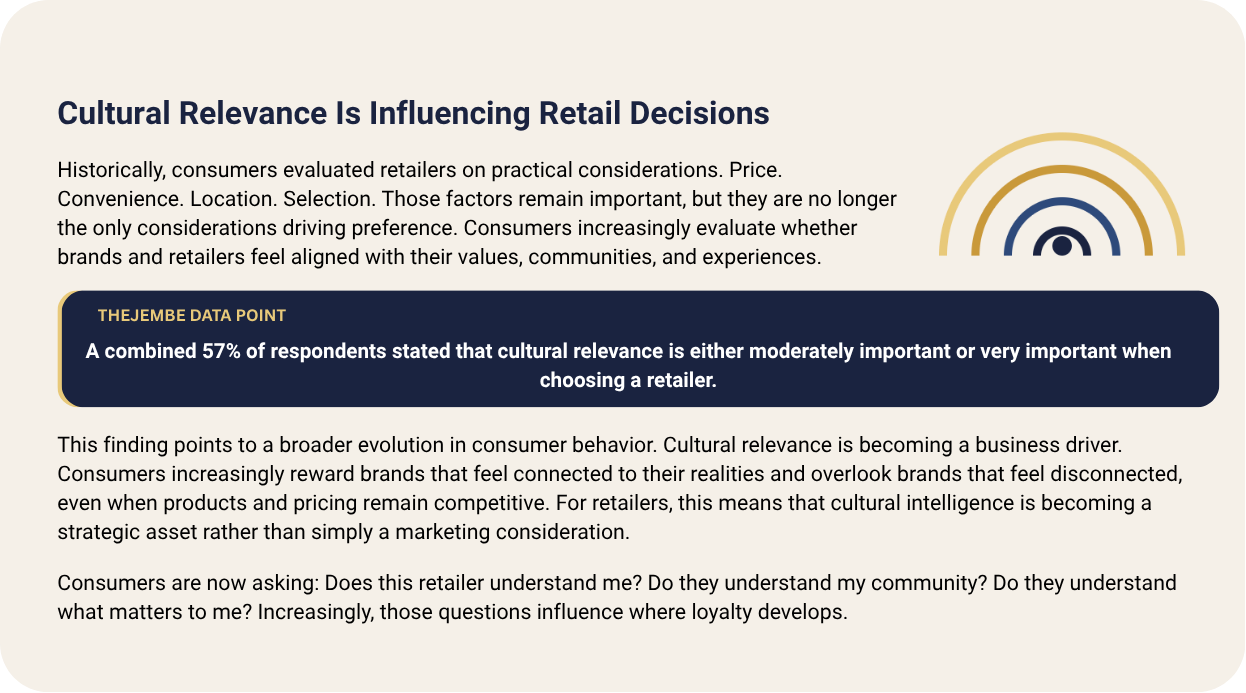
The brands earning attention are not always the brands with the largest advertising budgets or the broadest distribution. Increasingly, they are the brands that feel culturally relevant, emotionally resonant, and connected to the communities they serve. It’s a shift that has significant implications for retailers and brands alike.
Because if consumers are making decisions before they reach the shelf, the real battleground is no longer retail placement. It is relevance.


Key Shifts Reshaping Retail
Trust Is Being Built Outside Traditional Marketing
Trust has always mattered in retail. What is changing is where trust originates. For years, retailers and brands built trust through advertising, reputation, and physical presence. While those factors still matter, consumers increasingly rely on social proof, community validation, and cultural credibility when evaluating brands.
Consumers today are evaluating brands through a wider lens. Product quality still matters. Value still matters.
But consumers are now also paying attention to how brands behave, what communities they support, and whether their actions align with their messaging. This does not necessarily mean consumers expect brands to take positions on every issue. It does mean they increasingly expect consistency. Brands that feel authentic build trust. Brands that feel performative often struggle to sustain it.
The result is a retail landscape where trust is increasingly earned through cultural credibility rather than marketing alone.
Representation Opens the Door, but Understanding Builds Loyalty
Over the last decade, brands and retailers have made significant investments in representation. More diverse advertising. More multicultural creators. More inclusive campaigns. These efforts matter, but they have also become the baseline expectation. Consumers increasingly distinguish between representation and understanding.
For many consumers, representation creates awareness and consideration. But it does not automatically create loyalty. Consumers are increasingly asking whether representation reflects a deeper understanding of their experiences or simply serves as a marketing tactic.
The distinction matters because consumers are becoming highly skilled at identifying the difference. The brands earning long-term loyalty are often those that demonstrate understanding beyond the campaign itself.
That understanding may show up through product offerings, partnerships, community engagement, customer experience, or brand behavior. Representation gets attention. Understanding earns trust, and trust drives loyalty.
The New Retail Funnel
Perhaps the most important takeaway from this research is that the traditional retail funnel has fundamentally changed. The old model looked something like this: Awareness > Consideration > Retail visit > Purchase.
Today's journey is far less linear. Consumers often move through cycles of discovery, validation, social proof, and cultural endorsement before they ever engage with a retailer. Communities increasingly shape consideration. Creators influence awareness, while peers validate decisions. Retailers often enter the process later than they once did, meaning the brands winning today are frequently the brands that understand how culture influences consumer behavior long before a transaction occurs.
Yes, the shelf still matters. But it is no longer where loyalty begins.
What This Means for Brands and Retailers
Retailers and brands are entering an environment where cultural intelligence is becoming increasingly important to growth. The most successful organizations will continue investing in convenience, pricing, assortment, and customer experience. But they will also invest in understanding how consumers discover brands, build trust, and define relevance.
Because increasingly, consumer decisions are being shaped before products ever reach the point of purchase. The brands that understand this shift have an opportunity to build stronger relationships with consumers earlier in the decision-making journey. Those who do not risk competing only at the moment of transaction. And by then, much of the decision may already be made.
What This Means for Brands and Retailers
Retailers and brands are entering an environment where cultural intelligence is becoming increasingly important to growth. The most successful organizations will continue investing in convenience, pricing, assortment, and customer experience. But they will also invest in understanding how consumers discover brands, build trust, and define relevance.
Because increasingly, consumer decisions are being shaped before products ever reach the point of purchase. The brands that understand this shift have an opportunity to build stronger relationships with consumers earlier in the decision-making journey. Those who do not risk competing only at the moment of transaction. And by then, much of the decision may already be made.

The Jembe Intelligence Opportunity
Traditional retail analytics can tell brands what consumers purchased. Jembe Intelligence helps brands understand why they chose it.
Through real-time cultural intelligence, proprietary multicultural consumer panels, and ongoing audience research, Jembe Intelligence helps brands track emerging shifts in discovery, trust, loyalty, and cultural relevance among Black and multicultural consumers.