Cultural Loyalty and Discovery in Beauty and Fashion
The Market Has Shifted
For years, beauty and fashion brands approached Black consumers through a relatively straightforward playbook: increase representation, expand visibility, and align campaigns with cultural moments. In many ways, the strategy worked. Consumers wanted to see themselves reflected in industries that had historically overlooked them.
But the market has shifted.
Today, visibility alone is no longer creating loyalty. Consumers are evaluating something deeper: whether brands actually understand them. That distinction is subtly reshaping the beauty and fashion industries in ways many brands are still underestimating.
Black consumers are increasingly rewarding brands that feel culturally aligned, emotionally aware, and intentionally built with their lived experiences in mind. The shift is not simply aesthetic. It is structural. Trust is moving away from generalized inclusion and toward specificity, cultural fluency, and perceived authenticity.
This evolution is changing how consumers discover brands, what drives loyalty, and how purchasing decisions are made across beauty and fashion categories. And for brands still relying on traditional demographic segmentation alone, the gap between visibility and relevance is widening.

The Shift From Representation to Resonance
The beauty industry has spent the last decade investing heavily in representation. Expanded shade ranges, more diverse campaigns, and multicultural influencer partnerships have all become standard practice across the industry. But representation has increasingly become the baseline expectation, not the differentiator.
Black consumers are now asking more layered, nuanced questions:
- How do culturally grounded moments influence audience perception, emotional investment, and meaning-making processes?
- How can brands support or thoughtfully engage in cultural narratives without appropriation or surface-level participation?
- What distinguishes genuine cultural resonance from mere spectacle or manufactured viral moments?
- How do identity frameworks shape the interpretation of major media events across different communities?
- What measurement frameworks can capture emotional and interpretive response beyond traditional metrics?
- When does brand presence in a cultural moment enhance the narrative versus create dissonance or distrust?
These questions are changing how trust is formed.

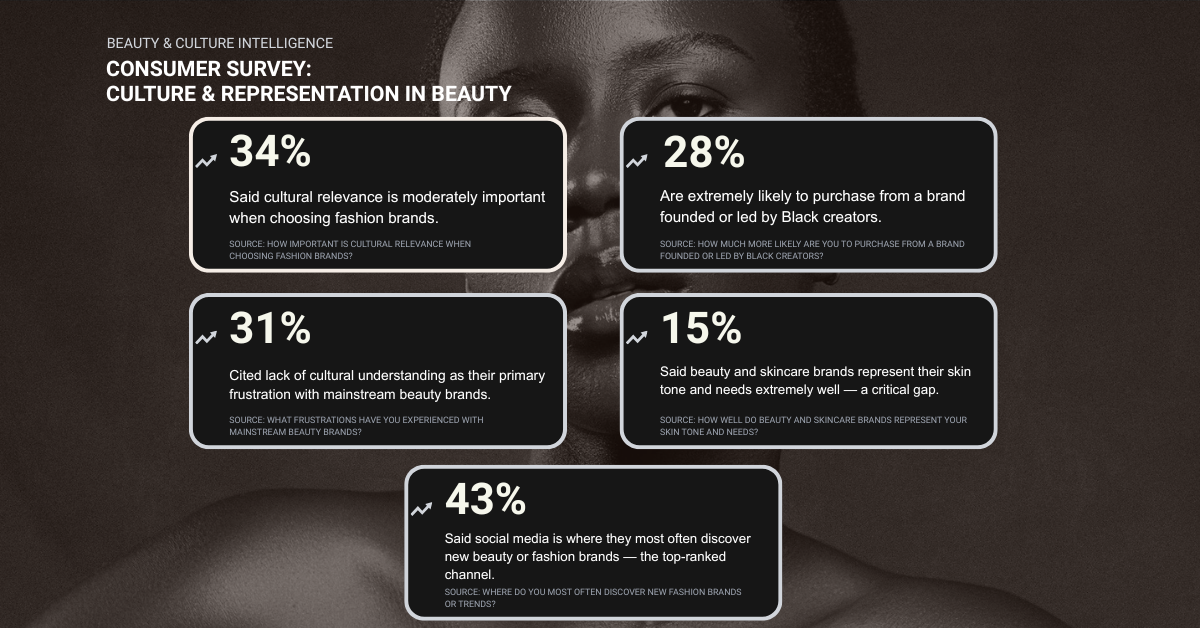
That response reflects a broader shift happening across consumer behavior. Cultural alignment is increasingly functioning as a purchasing filter, particularly among younger Black consumers who are highly sensitive to performative branding.
This shift is especially visible in beauty, where consumers increasingly distinguish between brands that include Black consumers and brands that feel built around Black consumer realities from the start.
That distinction influences not only purchase behavior, but emotional loyalty.

Founder Identity and Cultural Credibility
One of the clearest signals emerging from Jembe Intelligence research is the growing importance of founder proximity and cultural credibility. Black consumers increasingly associate founder-led or culturally rooted brands with greater authenticity, product understanding, and intentionality.

That finding is not simply about representation at the leadership level. It reflects a deeper perception that brands built by people with shared lived experiences are more likely to understand nuanced consumer needs from the beginning.
This matters because many frustrations Black consumers still experience with mainstream beauty brands are not surface-level frustrations. They are product and experience failures tied directly to cultural understanding.
Consumers continue reporting issues such as:
- Limited or inaccurate shade ranges
- Products not designed for textured hair or melanin-rich skin
- Messaging that feels disconnected
- Pricing structures that feel exploitative relative to value

These frustrations may appear merely operational on the surface, but collectively they signal something larger: consumers are questioning whether brands truly understand the audiences they claim to serve.
That perception gap is where many legacy brands are losing ground to culturally specific and founder-led competitors.

Discovery Is Becoming More Cultural
The path to discovery in beauty and fashion is evolving rapidly. Traditional advertising still plays a role, but influence is increasingly flowing through culturally trusted ecosystems rather than top-down marketing alone.
Consumers are discovering brands through:
- Black creators
- TikTok beauty communities
- Peer recommendations
- Culturally specific digital spaces
- Creator-led product reviews
- Community-driven beauty conversations
Discovery is becoming less institutional and more relational.

This shift matters because consumers increasingly trust people who feel culturally adjacent to them over polished brand messaging.
The rise of creator-driven discovery has fundamentally changed how credibility is built. Consumers no longer separate product performance from cultural alignment. The two increasingly operate together.
This is one reason many smaller beauty and fashion brands are able to gain traction quickly despite lacking the scale of larger competitors. Their messaging often feels more culturally specific, emotionally aware, and community-connected.
And in the current landscape, specificity creates resonance.
The New Trust Equation
Historically, beauty loyalty was often driven by aspiration. Consumers aligned themselves with brands that projected status, luxury, exclusivity, or trend leadership. Those dynamics still matter, but cultural trust is becoming equally influential.
Consumers increasingly reward brands that feel:
- Emotionally intelligent
- Culturally informed
- Community-aware
- Consistent in their messaging
- Intentional in product development
This is especially important among Black consumers, who are often highly attuned to the difference between visibility and actual understanding.

That answer reveals more than satisfaction with product offerings. It reflects whether consumers feel recognized in ways that feel functional, not symbolic. This is where many brands still struggle.
A campaign may visually signal diversity while the consumer experience itself remains disconnected. And consumers increasingly recognize that contradiction quickly. It’s a recognition that affects loyalty.
Loyalty today is less about whether consumers can see themselves in the campaign and more about whether they believe the brand sees them clearly in the first place.

What This Means for Brands
The beauty industry is entering a period where cultural intelligence is becoming operationally important, not just creatively important. The brands winning right now are not simply the brands with the largest budgets or the loudest campaigns. Increasingly, they are the brands that feel culturally coherent.
That coherence comes from alignment between:
- Product development
- Messaging
- Creator partnerships
- Consumer understanding
Obviously, this does not mean every brand needs to become founder-led or culturally niche. But it does mean brands need much deeper insight into how multicultural consumers interpret trust, intention, and authenticity in real time.
Because the market is moving away from broad representation and toward cultural specificity. And that shift is not temporary. It reflects a larger recalibration in how consumers decide which brands deserve loyalty in the first place.

The Jembe Intelligence Opportunity
Traditional dashboards can measure engagement. They can track clicks, conversions, and impressions.
But increasingly, brands need something more interpretive:
- How are consumers emotionally reading the brand?
- Where is trust strengthening or eroding?
- Which signals are driving cultural relevance?
- What behaviors indicate emerging loyalty shifts?
That is the role of cultural intelligence.