Culture on America’s Biggest Stage: What Kendrick Lamar and Bad Bunny’s
Culture Meets Spectacle
The Super Bowl Halftime Show holds a unique place in American media. It is one of the few entertainment moments that reaches deep into culture, conversation, and identity in real time.
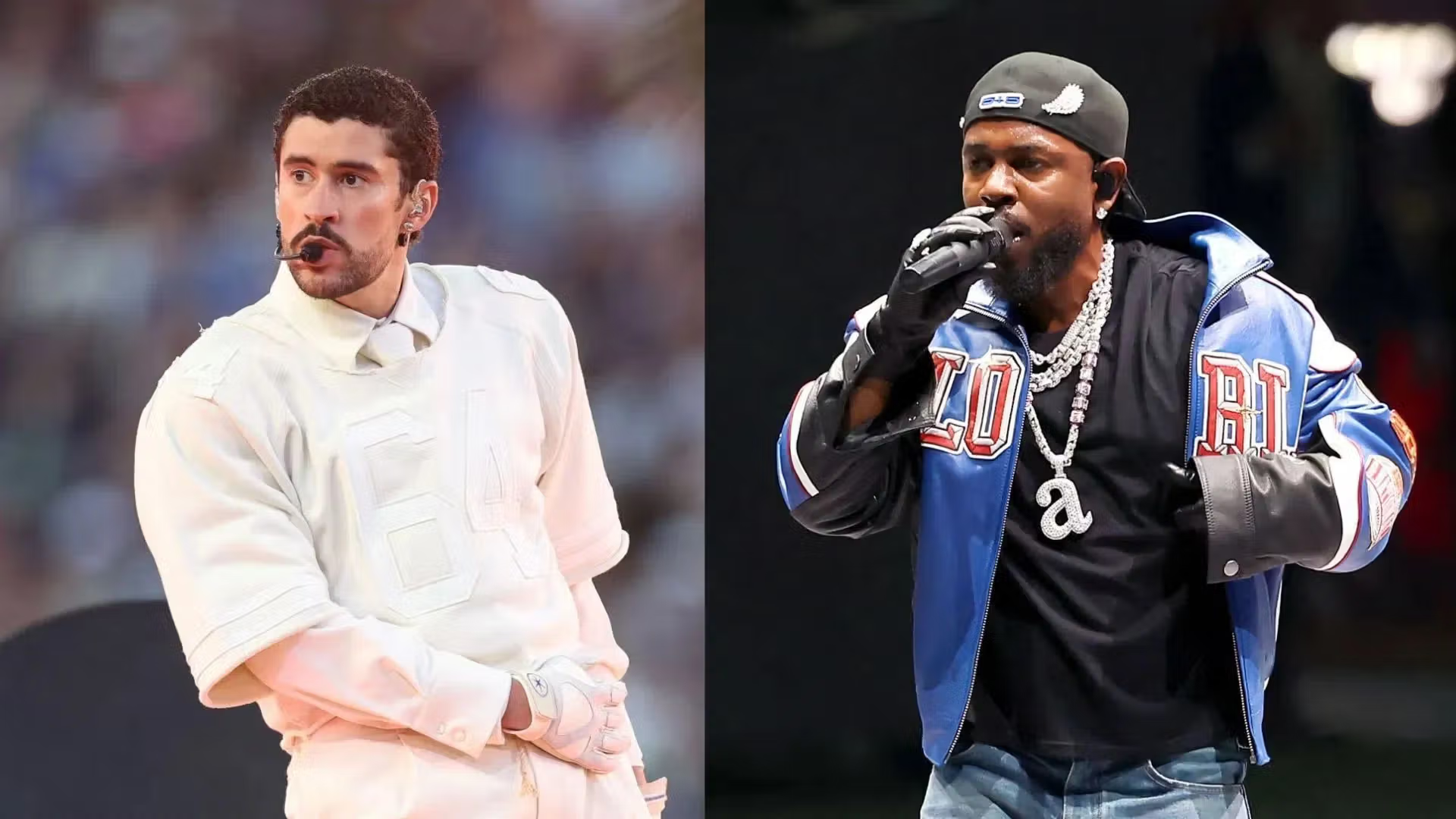
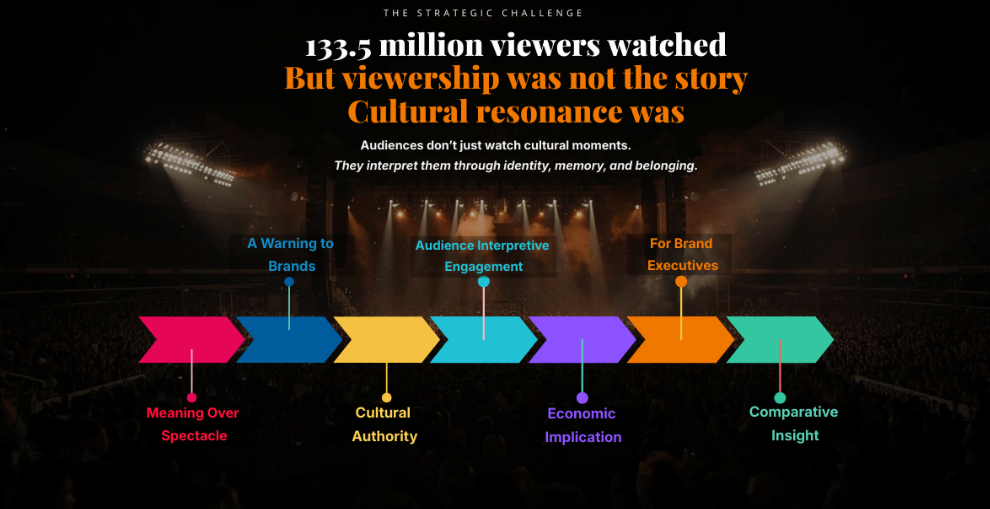
In 2025, Kendrick Lamar's halftime performance became the most-watched in U.S. history with roughly 133.5 million viewers, drawing not just eyeballs but emotional engagement from audiences.
TheJembe's survey of more than 700 viewers showed that Lamar's show was not just seen as entertainment but as a cultural expression that resonated deeply across identity and narrative lines. The performance became a touchstone moment—a shared cultural experience that audiences interpreted through their own lived experiences, community histories, and identity frameworks.
Months later, Bad Bunny's halftime performance generated similar cultural momentum through a different axis: global Latinx music culture, Spanish-language performance, and pride in heritage. Public reaction, social commentary, and cultural viral momentum around Bad Bunny's set suggested another signal: audiences are tuning in through cultural frameworks, not just spectacle.
Together, these performances illustrate a fundamental shift in how audiences interpret major media events and provide brands with a blueprint for how cultural resonance translates into emotional connection and strategic impact.

Resonance Over Reach
Brands still often treat cultural moments as opportunities for visibility, assuming
that high reach equals cultural engagement. But reaching a cultural audience
requires more than placement; it requires resonance. Linkage to identity. Trust in
narrative. Genuine alignment with lived experience.
The traditional marketing playbook focuses on impressions, reach, and awareness
metrics—quantifiable numbers that look impressive in quarterly reports but often
fail to capture the emotional depth of cultural connection. This approach treats
audiences as demographic segments to be targeted rather than communities to be
understood and engaged with authenticity.
The primary strategic questions for brands navigating cultural moments should be:
- How do culturally grounded moments influence audience perception, emotional investment, and meaning-making processes?
- How can brands support or thoughtfully engage in cultural narratives without appropriation or surface-level participation?
- What distinguishes genuine cultural resonance from mere spectacle or manufactured viral moments?
- How do identity frameworks shape the interpretation of major media events across different communities?
- What measurement frameworks can capture emotional and interpretive response beyond traditional metrics?
- When does brand presence in a cultural moment enhance the narrative versus create dissonance or distrust?
For brand strategists, the challenge is understanding that cultural moments are not neutral canvases. They are
interpretive spaces where audiences bring their full identity, history, and cultural knowledge to bear on what they're
experiencing.

The Strategic Challenge
Cultural Resonance as a Strategic Metric
Following Kendrick Lamar's halftime show, TheJembe conducted a targeted
perception study among more than 700 viewers who watched the broadcast. The
research probed depth of experience, emotional reaction, and cultural interpretation
rather than basic like/dislike metrics.
Instead of focusing on raw viewership numbers or counting shareable moments,
the study surfaced qualitative resonance patterns that reveal how different cultural
communities interpret storytelling, narrative cues, and identity signaling.
For the comparison with Bad Bunny's performance, TheJembe combined Lamar's performance
data with broader public reaction trends, social commentary patterns, and cultural signals
observed across global audiences.


What We Uncovered
Cultural Resonance Outperforms Neutral Appeal
Kendrick Lamar's performance was widely rated "Excellent" by the majority of respondents. But the deeper insight was how audiences interpreted it as an extension of identity storytelling—engaging with meaning, lyrical choice, cultural symbolism, and historical depth as part of their own cultural maps.
Similarly, Bad Bunny's halftime performance was widely discussed as a moment of cultural representation for Spanish-language and Latinx audiences globally and domestically. Rather than neutral entertainment, the performance sparked emotional connection that transcends the moment itself.
Identity Interpretation Drives Engagement
TheJembe's survey revealed that audiences naturally evaluate cultural moments through complex
identity lenses, not simple like/dislike binaries. For Lamar, Black cultural context was an integral part of
narrative interpretation. For Bad Bunny, Latinx cultural pride became a vehicle for group identity
affirmation.
This means that cultural moments are not simply viewed—they are experienced, shared, and
interpreted. They become narrative hooks that audiences use to make sense of their own identity
and cultural belonging.
Representation Validates Identity at Scale
When cultural representation happens on the largest media stage in America, it doesn't just reach
audiences—it affirms them. Social media responses included expressions of pride, emotional
reactions to seeing Spanish-language performance normalized on mainstream American television,
and discussions about what this visibility means for future representation.
When artists bring authentic cultural authority to mass platforms, audiences respond not just with
viewership but with trust—a critical currency that brands should understand and respect.
Cultural Authenticity Influences Perception
Audiences gravitate toward performances that reflect authentic cultural narratives. They interpret artistic choices not as abstraction but as shared experience markers—cultural touchstones that signal "this artist understands where I come from."
For both performers, positive perception hinged on how their choices reflected cultural participation rather than broad-spectrum generalization. The authenticity was the point, and audiences rewarded it with engagement and emotional investment.
A Warning to Brands
Presence ≠ Relevance
Presence in a cultural moment does not automatically guarantee relevance. In fact, misaligned presence can actively damage brand perception and erode trust that took years to build. Audiences have finely tuned cultural detectors—they can distinguish between brands that understand the cultural context and those simply chasing viral moments or checking diversity boxes.
The performances by Kendrick Lamar and Bad Bunny succeeded because they came from positions of cultural authority. The artists didn't
perform for the culture; they performed from within it. They brought their full artistic and cultural selves to the stage without dilution or
compromise.
For brands, the implication is stark: relevance is earned through alignment, not purchased through placement. Cultural credibility cannot
be manufactured in a campaign sprint or borrowed through influencer partnerships with no deeper cultural investment.

Three Strategic Shifts for Brands
Cultural moments matter only if they connect with identity frameworks. Brands must shift
from a visibility mindset to a cultural resonance mindset, where the measure of success is not
reach but interpretive engagement.
First—Meaningful Narrative Partnerships: Move beyond influencer endorsement transactions
into genuine co-creative storytelling relationships. When narratives reflect cultural logic shared
with communities, audiences internalize them as authentic rather than performative.
Second—New Measurement Frameworks: Develop measurement systems that track
emotional and interpretive response—sentiment analysis that understands cultural nuance,
cultural signaling recognition, identity alignment indicators—not just vanity metrics like
impressions or recall.
Third—Culture as Strategic Asset: Treat culture as woven into the fabric of brand strategy, not
as a marketing layer applied during heritage months. Cultural fluency needs operational
support across creative development, media strategy, consumer engagement, and
organizational culture.

Different Identities, Same Strategic Outcome
Kendrick Lamar reflected Black cultural lineage, weaving together hip-hop history, social
commentary, and artistic innovation rooted in decades of Black musical tradition. Bad Bunny
amplified global Latinx pride, performing primarily in Spanish and centering Caribbean and Latin
American musical traditions.
These were fundamentally different cultural expressions, rooted in distinct histories and
communities. Yet both achieved the same strategic outcome: cultural resonance that translated
into massive engagement, positive sentiment, and lasting impact.
The common thread was not the specific culture being represented, but the authenticity of that
representation and the artists' cultural authority within their communities.

The Bottom Line
Modern audiences do not evaluate cultural moments in isolation. They interpret them through
identity, shared history, and emotional resonance. The data reveals a fundamental truth: cultural
fluency has become a competitive advantage.
- Culture is an interpretive arena where meaning is created, shared, and monetized
- Visibility creates awareness; cultural resonance creates loyalty and sustained engagemen.
- Modern cultural moments are decoded, felt, and integrated into audience identity narratives.
- Brand impact lives in resonance, not reach.
- Authenticity is not a creative flourish; it's a strategic imperative